
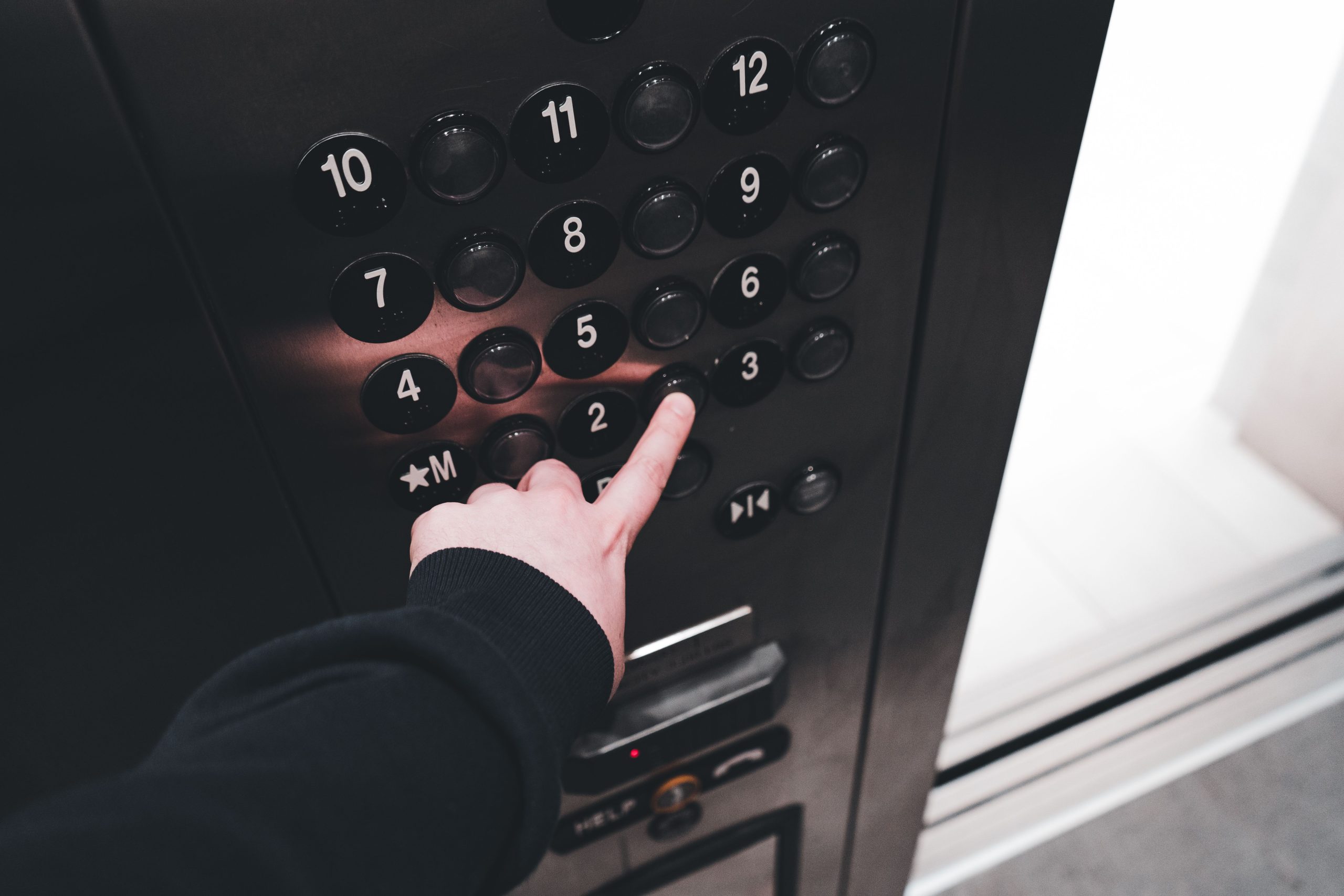

A lift and an elevator are the same machine. “Lift” is British English, “elevator” is American English, and Kenya uses both, frequently in the same sentence.
What sits underneath them matters more: the type of lift or elevator you are quoted, and the legal duty attached to it.
Is a lift the same as an elevator?
Yes. A lift and an elevator are the same machine: a car or platform travelling between floors along fixed guides inside a shaft. “Lift” is standard British English and the term used in Kenya, the UK and India. “Elevator” is American English. There is no engineering difference between the words.
Kenya inherited British English, so buildings here have lifts and lift shafts. Marketing runs the other way, because most manufacturers localise into US English.
Ignore the claim that a lift carries goods while an elevator carries people, or that elevators hold more weight. Capacity and rating come from the machine’s design and its standard, not the word.
Platform lift or passenger elevator? Here the difference is real
The two words are interchangeable. Two products are not. Ask for a lift and you may be quoted a platform lift, which is a different machine.
| Platform lift | Passenger lift (elevator) | |
| Enclosure | Open or partial | Fully enclosed car in a shaft |
| Travel | One or two levels | No practical limit |
| Speed | Well under 0.5 m/s | From around 1 m/s upward |
| Standard | EN 81-41 | EN 81-20 |
Pit depth, shaft dimensions and structural loading all differ. A platform lift put in where a passenger elevator was intended will fail on traffic handling long before anyone checks the paperwork.
Types of lifts and elevators in Kenyan buildings
Whichever word you use, the categories are the same: passenger lifts in apartments and offices, home lifts in villas, goods lifts in warehouses, hospital lifts, dumbwaiters in hotels, and panoramic lifts in mall atriums. Drive systems are traction, machine room less or hydraulic.
In Kenyan law it is a lift, and that carries duties
Whether you call it a lift or an elevator, Kenyan law uses only one of those words. Section 63 of the Occupational Safety and Health Act, 2007 is headed “Hoists and lifts.” The Act does not use the word elevator anywhere.
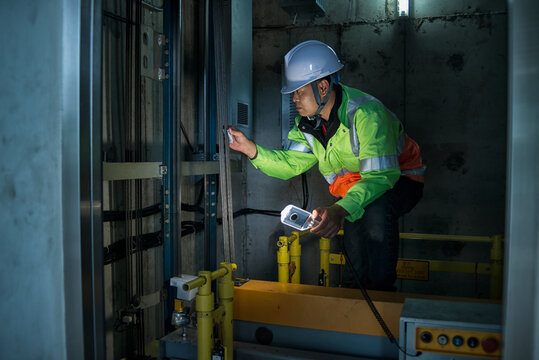
Under Section 63, every lift must be thoroughly examined at least once in every period of six months. An examination is also required after any modification or extensive repair. The examiner must be approved in writing by the Director of Occupational Safety and Health Services. The signed report goes into the general register within fourteen days.
If the examination shows the lift cannot safely continue without immediate repairs, the examiner must notify the area occupational safety and health officer within twenty-four hours. Written notice follows within seven days. The officer can then issue an improvement or prohibition notice, and a prohibition notice stops the lift being used.
Passenger lifts carry extra requirements: overrun prevention, interlocked gates, and at least two separate suspension ropes each rated for the full load.
One point causes most of the trouble. Your lift or elevator contractor is not automatically the approved examiner. Approval is a separate certificate under Section 23, renewed annually, so a service sheet does not discharge the Section 63 duty.
For capacity planning, cost drivers and model selection, read our guide to choosing the right elevator in Kenya. If you are unsure where your lift or elevator stands on examination, talk to our team in Nairobi.
FAQs:
Is a lift the same as an elevator?
Yes. Two names for the same machine. “Lift” is British English and the standard term in Kenya; “elevator” is American English. Any difference in capacity comes from the product, not the word.
How often must a lift or elevator be inspected in Kenya?
Under Section 63 of the Occupational Safety and Health Act, 2007, at least once every six months, and after any modification or extensive repair, by a person approved in writing by the Director of Occupational Safety and Health Services. Non-powered lifts are examined every twelve months.
Does my contractor’s service visit count as the statutory examination?
Not unless that person holds current approval from the Director to examine lifts, issued under Section 23 and renewed annually. Servicing and the six-monthly examination are separate obligations.
What is the difference between a platform lift and a passenger elevator?
A platform lift is an open or partly enclosed platform serving one or two levels at low speed, usually for wheelchair access. A passenger elevator is a fully enclosed car in a shaft with no practical travel limit.