

Your building’s elevator runs hundreds of trips every week. Most of the time, nobody thinks about it, until it stops working. A stuck cab during morning rush hour, a floor leveling error that keeps tripping the safety sensor, a control panel nobody can source parts for anymore. By the time those problems stack up, you’re already past the point where a simple repair fixes things.
Planning an elevator upgrade before the system forces your hand is one of the smartest decisions a building owner or facility manager in Kenya can make. This guide gives you a practical, locally grounded framework for knowing when to act, what your options are, and what to realistically budget for.
5 Warning Signs Your Elevator Needs an Upgrade — Not Just a Repair
There’s a meaningful difference between a lift that needs maintenance and one that needs modernization. These five signs tell you which situation you’re in.
- Breakdowns happening more than twice a year. One or two service calls over 12 months is normal wear. Three or four calls for different recurring issues means you’re paying for patches, not solutions, and that pattern only gets more expensive over time.
- The elevator is stopping above or below floor level. This floor leveling error happens when the control system or motor drive is aging and losing precision. It’s a real safety risk, particularly for elderly users or anyone with mobility needs. Repeated adjustments don’t fix this, a controller upgrade does.
- No remote diagnostics on the system. Modern lift systems flag issues before they cause failures. If your elevator runs on a control system installed before 2012, it likely has no connectivity at all, meaning every problem is only discovered when something breaks.
- Energy consumption rising without more traffic. Older traction and hydraulic systems weren’t built for efficiency. If your electricity bill has grown without a change in building activity, the motor or drive system is likely the cause. Modern regenerative drives reduce elevator energy use by 30–40%.
- The cab looks older than the rest of the building. For commercial properties in Nairobi competing for quality tenants, a worn-out cab interior and noisy, sluggish ride send the wrong message to anyone walking in for the first time.
The 3 Types of Elevator Upgrade — Which One Does Your Building Need?
The right approach depends on your lift’s age, current condition, and your building’s long-term plan.
Component Upgrades
You replace specific parts — door operators, cab lighting, call panels, or safety devices — while the main structure stays intact. Best for lifts under 15 years old that are structurally sound but underperforming in specific areas. Typical project time: 3–7 days.
Modular Modernization
The hoisting machinery, control unit, and drive system are replaced, giving the elevator essentially new mechanical and electronic internals while keeping the existing shaft and structure. This is the most common commercial elevator upgrade in Kenya, it delivers the biggest improvement in reliability, safety, and energy efficiency relative to cost. Typical project time: 1–3 weeks.
Full Replacement
When a lift has reached the end of its structural lifespan, hydraulic elevators past 20–25 years, traction systems past 30, full replacement is the right call. The shaft is retained; everything else is removed and replaced with a fully certified modern installation. Typical project time: 4–6 weeks.
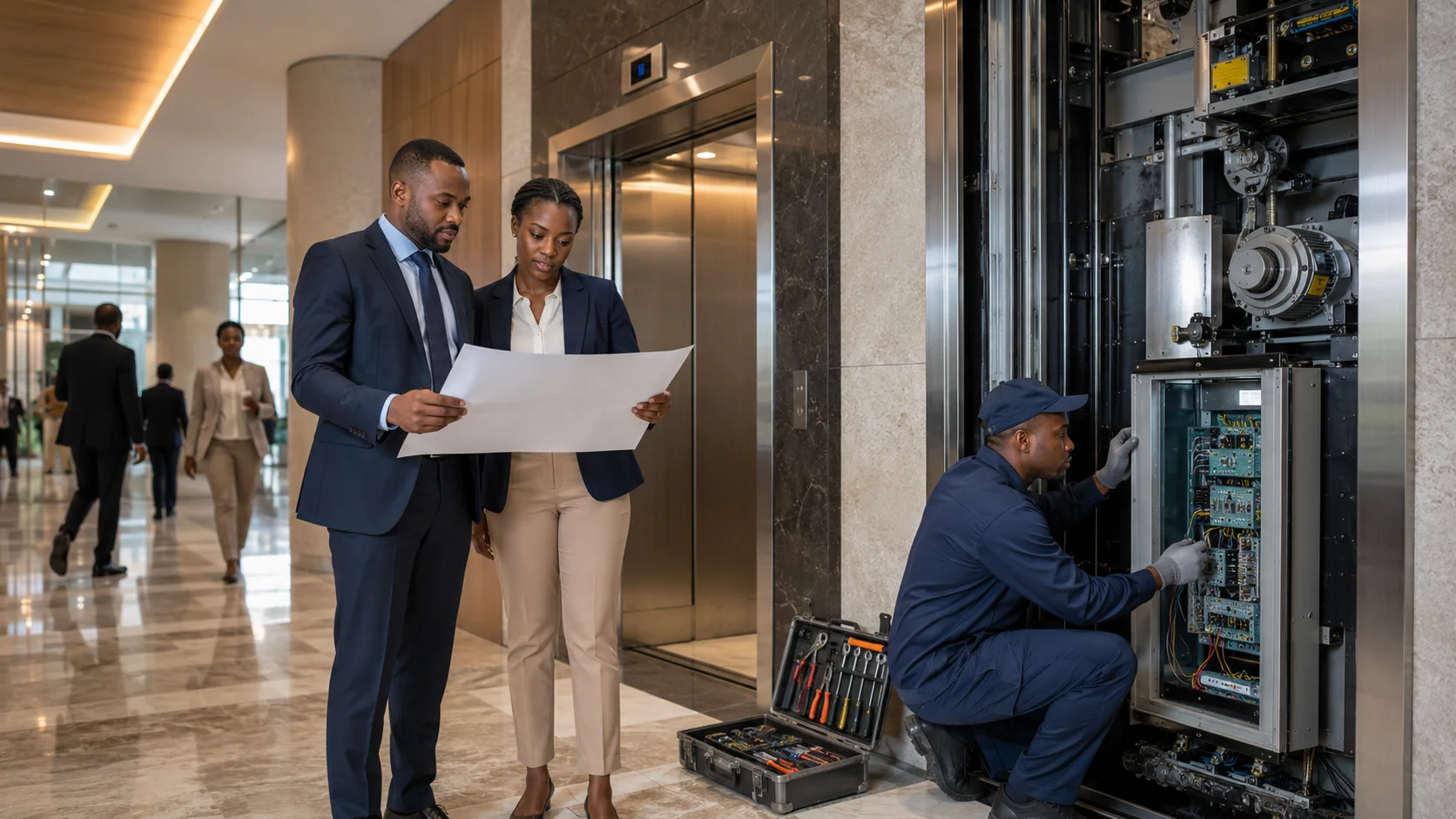
If you’re unsure which level applies to your building, a professional site survey from a qualified provider gives you a clear answer before you commit any budget.
Elevator Upgrade Cost in Kenya — Real Figures for 2025
This is the question every building owner asks and almost no article answers directly. Here are realistic cost ranges for the Kenyan market:
- Component upgrades: KES 150,000 – 700,000 depending on which parts are replaced and the brand of the existing system
- Modular modernization: KES 1.5M – 4M per elevator unit, covering control system, drive, hoisting machinery, and door equipment
- Full replacement: KES 4M – 10M+, depending on capacity, number of floors, and import costs
Buildings with non-standard shaft dimensions, older proprietary systems, or high-rise configurations above 10 floors sit toward the upper end. Straightforward mid-rise layouts cost considerably less.
What rarely gets factored in is the cost of not acting. A single breakdown in a fully occupied commercial building — emergency call-out fees, tenant disruption, potential liability — can cost more than a planned lift modernization in Kenya. Over three to five years, proactive modernization almost always costs less than reactive repair.
How to Minimize Disruption During an Elevator Upgrade
Downtime is the concern that makes building managers hesitate most. With proper planning, it’s manageable for almost any building type.
For buildings with two or more lifts, staggered modernization, completing one at a time, keeps vertical access available throughout the project. This is standard practice for commercial elevator upgrade projects across Nairobi’s office and mixed-use buildings.
For residential buildings, scheduling around school holiday periods significantly reduces impact on residents. For commercial buildings, overnight and weekend work preserves full daytime building access. Your role is to communicate clearly with tenants and identify alternative stairwell routes. A competent provider handles technical execution, regulatory sign-offs, and on-site safety barriers — those details shouldn’t land on your desk.
The ROI Case for Elevator Modernization in Kenya
A lift modernization in Kenya isn’t purely a maintenance expense, it’s a capital decision with measurable returns.
On energy, modern regenerative drive systems reduce elevator electricity consumption by 30–40% annually. On maintenance, service call frequency drops sharply after a completed upgrade, and parts are standardized rather than obsolete. Building managers consistently report lower annual maintenance spend in the three to five years following a successful elevator upgrade.
On tenant retention, corporate tenants evaluating office space in Nairobi notice the details. A slow, unreliable lift is a legitimate negative in a leasing decision. On property valuation, institutional buyers and professional valuers factor in the condition of mechanical systems, a recently completed upgrade is a documented improvement that feeds directly into asset value.
Conclusion
The decision to plan your elevator upgrade on your terms, before a breakdown makes it urgent, protects your tenants, your asset, and your budget. Visit IET Solutions to explore the full range of elevator upgrade and lift modernization services, or reach out directly to arrange a no-obligation building assessment.
FAQs:
How much does an elevator upgrade cost in Kenya?
Elevator upgrade costs in Kenya vary based on the type of upgrade, number of floors, shaft dimensions, and equipment brand. The best way to get an accurate figure is through a professional site assessment, contact IET Solutions for a no-obligation quote tailored to your building.
How long does elevator modernization take in Kenya?
Component upgrades take 3–7 days. Modular modernization runs 1–3 weeks. Full replacement takes 4–6 weeks. For multi-lift buildings, staggered scheduling keeps at least one elevator running throughout.
When should I upgrade vs. replace my elevator entirely?
If the structure is sound and the system is under 25 years old, modular modernization is almost always the smarter financial choice. Full replacement is only necessary when structural components are beyond their lifespan or critical parts are no longer manufactured.
Do elevator upgrades require government inspection in Kenya?
Yes. Any significant upgrade requires inspection and certification by relevant Kenyan authorities before the system returns to service. A reputable provider manages this entire process on your behalf, if they don’t mention it upfront, that’s a red flag.
Can an elevator be upgraded without shutting down the whole building?
In most cases, yes. Multi-elevator buildings stagger the work so one lift stays operational throughout. Single-elevator buildings schedule work during low-occupancy periods, weekends, public holidays, or overnight shifts.