


An elevator, called a lift in Kenya, is a powered machine that carries people or goods vertically between the floors of a building. It works by moving a car inside an enclosed shaft, driven either by an electric motor pulling steel ropes balanced against a counterweight, or by a hydraulic piston pushing the car up on oil pressure. A control system decides where the car goes, and several independent safety devices stop it falling. Below is how each part works, from the motor at the top of the shaft to the sensors that hold the doors open.
The Basic Idea Behind How Elevator Works
An elevator moves a car up and down a shaft using either ropes and a counterweight or oil pressure. Traction lifts pull the car with steel ropes over a motor-driven wheel. Hydraulic lifts push it up with a piston. Around either sits a control system and independent safety devices.
The Main Parts of an Elevator
- Car — the cabin you stand in.
- Shaft or hoistway — the enclosure it travels through.
- Machine — motor, sheave (a grooved wheel) and brake.
- Ropes or belts — steel suspension to the counterweight.
- Counterweight — the balancing mass moving opposite.
- Guide rails — vertical steel keeping the car aligned.
- Controller — electronics registering and dispatching calls.
- Pit and buffers — cushions below the lowest landing.
Traction Elevators: How They Work
An electric motor turns the sheave. The ropes run over it with the car on one side and the counterweight on the other, so turning it raises one and lowers the other. Because the sides nearly balance, the motor moves only the difference. Traction suits mid- and high-rise buildings.
Hydraulic Elevators: How They Work
No ropes, no counterweight. A pump forces oil into a cylinder and the pressure drives a piston that pushes the car up. To descend, a valve releases the oil and gravity lowers the car, needing no power. Best up to five or six floors.
The Role of the Counterweight
This is what makes a traction lift practical. The counterweight usually matches the empty car plus 40 to 45 per cent of rated load, so a moderately full car is nearly balanced. The motor works against the imbalance, not the whole load, cutting machine size and energy use.
How the Elevator Knows Where to Stop
It tracks position continuously rather than counting floors. An encoder on the motor and sensors in the shaft tell the controller exactly where the car is. Approaching a landing, it slows along a planned curve and levels the car flush.
How the Control System Manages Calls
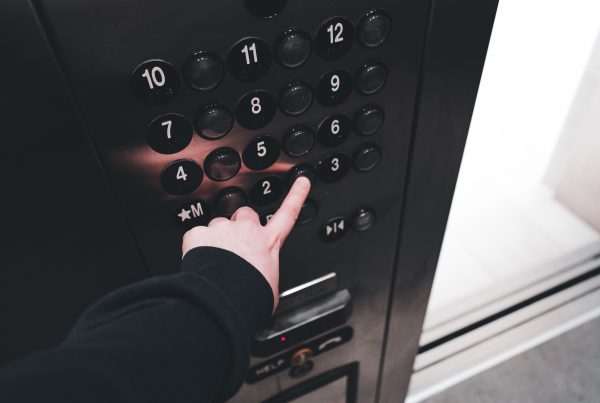
Pressing a button registers a call. The controller serves outstanding calls in the order that minimises total travel, which is why a lift may pass your floor going up and collect you coming down. With several lifts, group control stops them all answering the same call.
How Elevator Doors Open and Close
A motor on the car drives both the car and landing doors, engaging them as it arrives. Sensors across the opening detect obstructions. Crucially, the doors sit in the circuit that permits movement: the car cannot leave until every door is shut.
Safety Systems That Keep You Safe
No single component is trusted to prevent a fall. Under section 63 of Kenya’s Occupational Safety and Health Act 2007, a passenger lift must hang from at least two ropes, each rated to carry the full car and maximum load alone. The Act also requires devices to hold the car if the ropes fail: an overspeed governor trips safety gear that wedges the car against the rails. Door interlocks, overrun protection, a brake that engages when power is lost, and pit buffers complete it.
What Happens During a Power Outage?
The car stops; it does not drop. The brake engages automatically, and a battery unit keeps lighting, alarm and intercom running, then levels the car to the nearest floor and opens the doors. Hydraulic lifts descend under controlled gravity instead, as explained in our hydraulic and electric comparison.
Understanding the Machine You Ride Every Day
An elevator looks simple from inside the car, but it’s a balanced mechanical system with several independent layers of protection built around it. Knowing how it works makes it easier to tell a well-maintained lift from a neglected one.
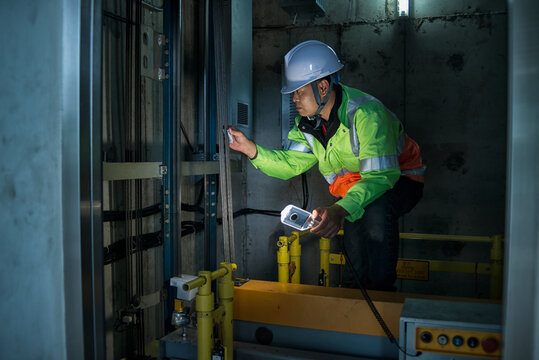
IET Solutions supplies, installs and maintains elevators and escalators across Kenya, with skilled and experienced technicians and spare parts held locally. If your building’s lift needs attention, get in touch for a site assessment.
FAQs
What is an elevator?
A powered machine carrying people or goods vertically between floors in a car running inside an enclosed shaft.
How does an elevator actually move up and down?
A motor turns a sheave pulling ropes that connect the car to a counterweight. In hydraulic lifts, a piston pushes the car up on oil pressure.
How does an elevator decide which call to answer first?
In the order that minimises total travel, which is why a lift may pass your floor and return.
What stops an elevator from falling?
Several independent systems. Kenyan law requires at least two ropes, each rated for the full load alone, plus safety gear that clamps the car to the rails if it overspeeds.
What happens if an elevator loses power while you are inside?
The brake engages and the car stops. Battery backup keeps lights, alarm and intercom on, and normally levels it to the nearest floor.
Why do elevator doors reopen on their own?
Sensors across the doorway detect an obstruction. The car cannot move unless every door is shut, so reopening is the system working.