

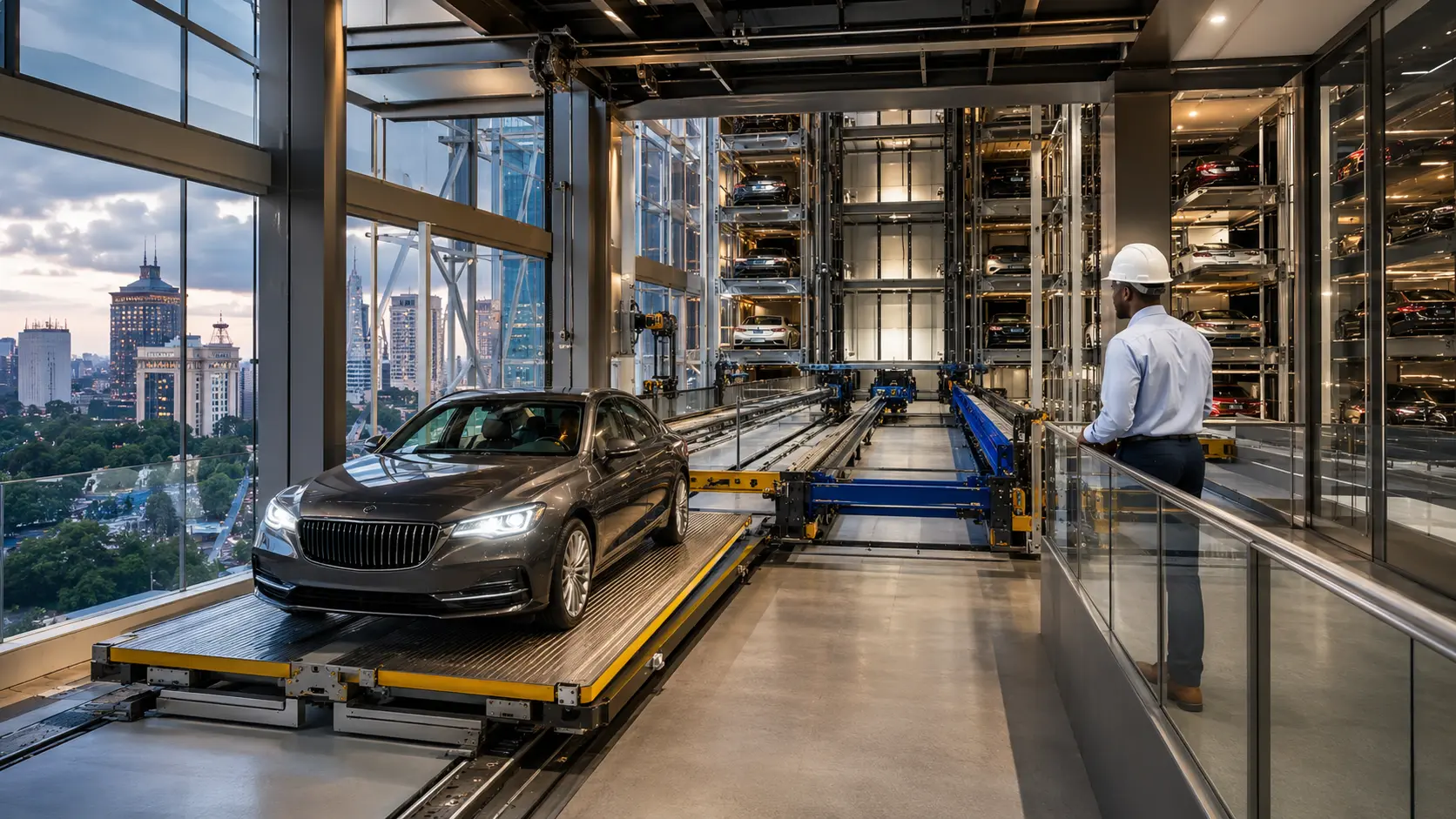

Automatic car parking systems are transforming the future of urban mobility and land efficiency. As cities grow and available land shrinks, the demand for automatic car parking systems continues to rise, maximizing the number of vehicles parked in a limited footprint while improving convenience, safety, and operational efficiency. These highly engineered solutions remove the stress of searching for space, reduce emissions from circling cars, and deliver secure and seamless parking experiences for drivers.
What Is an Automatic Car Parking System?
An automatic car parking system is an advanced, fully automated infrastructure that parks and retrieves vehicles without the driver entering the parking area and without vehicle movement by the driver. Unlike traditional parking garages or simple mechanical parking systems that only lift vehicles, these systems:
- Move the car automatically into a suitable bay
- Use intelligent car parking automation to optimize storage
- Operate in multiple levels both vertically and horizontally
- Deliver cars back to users quickly on demand
They rely heavily on engineering and digital control to create precise, efficient, automated parking systems for residential, commercial, and public facilities.
Key Functionalities
- Automated storage and retrieval
- Minimal human intervention
- Enhanced safety and controlled access
- Space optimization through vertical stacking
- Smart decision-making for bay allocation
Key Components of the System
Automatic car parking systems rely on advanced mechanical and digital components working together. The main components include:
- Parking Slots / Bays
Compact storage locations designed to house vehicles securely.
- Lifts / Elevators / Hoists
These raise or lower cars between levels, especially in high-rise smart parking solutions.
- Shuttles and Conveyors
Horizontal transfer systems move vehicles inside the structure with precision.
- Turntables
Used to correct vehicle orientation for easy entry or exit.
- Control System & Automation Software
A central intelligence that:
- Registers vehicles
- Assigns storage bays
- Controls movement logistics
- Provides interface via kiosk or app
- Safety Mechanisms & Sensors
- Obstacle detection
- Weight/size validation
- Fire detection & emergency alarms
- Anti-collision monitoring
These elements ensure car parking automation is reliable during every operation.
How Automatic Car Parking Systems Work?
Step 1: Vehicle Entry & Registration
- The driver enters the designated bay (loading module)
- Vehicle positioning sensors confirm correct parking
- The driver exits the vehicle and closes the gate
- The system logs vehicle data (plate, dimensions, timestamp)
From this moment, robotic parking systems take over.
Step 2: Vehicle Transfer & Storage
- A lift or conveyor engages the car
- The car is automatically transported to an available bay
- System packs vehicles with minimal clearance, maximizing capacity
This optimized movement allows automated parking systems to utilize more than 60–120% additional capacity compared to traditional garages.
Step 3: Vehicle Retrieval on Demand
- Driver uses ticket, code, or mobile app to request car
- System locates the exact bay
- Transfer units retrieve the vehicle and return it to the exit bay
- Driver simply enters the car and drives away
Typical retrieval times range from 45 seconds to 3 minutes, depending on the system configuration.
Step 4: Continuous Safety Monitoring
Throughout the process, sensors and software supervise:
- Clearance gaps
- Vehicle alignment
- System loading conditions
- Human proximity (restricted zones)
This makes mechanical parking systems safer than conventional parking areas where accidents and collisions are common.
Types of Automatic Parking Systems
Every location has different constraints, so choosing the correct system matters. The most common types include:
Puzzle / Carousel Parking Systems
- Horizontal or vertical carousel movement
- Cars move like a puzzle to access a specific slot
- Best for small plots and limited capacity areas
Ideal for residential buildings, private villas, and small commercial lots.
Lift + Shuttle / Stack Parking Systems
- Elevator lifts vehicles vertically
- Shuttle distributes them horizontally
- Enables large multi-level facilities underground or above ground
Popular in offices, malls, hotels; where smart parking solutions must handle high traffic efficiently.
Robotic / AGV-Based Parking Systems
- Robot carts or AGV (Automated Guided Vehicles) carry vehicles
- Highest automation level
- Fastest retrieval and most flexible vehicle handling
Used in premium buildings, airports, hospitals, and mega-projects.
Multi-Level Stacker Systems
- More basic mechanical parking systems
- Stack cars vertically using hydraulic lifts
- Lower cost but slower throughput
A practical choice for tenant parking or low-traffic corporate sites.
Advantages of Automatic Parking Systems
Automatic car parking systems deliver transformative benefits:
Maximum Space Efficiency
- Fits more cars in the same land footprint
- Reduces costly real estate usage
Enhanced User Convenience
Drivers do not:
- Search for parking
- Navigate tight ramps
- Risk scratches or dents
Higher Security
- Closed access eliminates vandalism, theft & accidental damage
- Full CCTV surveillance
Reduced Emissions & Traffic Congestion
Eliminates the need to drive around searching for a spot, cutting fuel waste and helping maintain cleaner, greener urban environments.
Lower Operational Costs Over Time
Despite investment cost, car parking automation saves money long-term through optimized land and staff reduction.
Supports EV Future
Charging stations can be integrated within automated parking systems.
Challenges & Considerations
Initial Installation Investment
- Structural modifications needed
- Advanced machinery and software installation
- Tailored design for every facility
Maintenance Requirements
- Regular mechanical servicing
- Skilled technicians required
- Backup systems recommended to avoid downtime
Vehicle Dimensions Limitations
- Some models (big SUVs, lifted 4x4s) may exceed height limits
- Weight limits vary by mechanical model
Retrieval Time at Peak Hours
To avoid delays:
- Multi-lift systems or optimized queueing logic should be used
Safety, Codes & Regulations
- Fire safety compliance (extinguishers, sprinklers)
- Ventilation requirements, especially underground
- Emergency evacuation protocols
Developers must ensure full compliance before deployment.
How to Choose the Right System for Your Project?
Evaluate Site Constraints
- Available footprint
- Height/underground depth
- Soil condition and structure
Analyze Required Parking Demand
- Peak times and throughput expectations
- Type of users (short-stay vs long-stay)
Assess Budget vs Long-Term ROI
- Compare land savings vs operational cost
- Factor energy usage into feasibility
Check Vehicle Specifications
- Standard car sizes vs luxury vehicles or EVs
Review Local Safety Standards
- Building and fire regulations
- Accessibility for elderly, disabled users
Consider Digital Experience
- App-based control
- Ticketless access integration with gated entry
- Real-time slot availability
A smooth human interface is essential for a premium experience.
Partner with IET Solutions Kenya for Advanced Parking Technology
If you’re exploring automatic car parking systems for a new development in Kenya or East Africa:
Discover smart, scalable, and efficient parking innovations here: IET Solution
IET Solutions Kenya assists with:
- System design & engineering
- Reliable installation
- Long-term service + maintenance
- Customized solutions based on your property needs
Build the future of mobility with confidence, enhance your building value through automation.
FAQs:
What’s the difference between automatic parking and mechanical stacker parking?
Mechanical stackers only lift cars vertically, while automatic parking systems fully manage positioning, movement, and storage using robotics and digital control.
Are automatic parking systems safe for daily use?
Yes. They include safety sensors, access control, fire systems, and emergency procedures, making them safer than traditional garages.
Can oversized SUVs use these systems?
It depends on model limits. High-roof or heavy vehicles may require customized bays.
How long does it take to retrieve a car?
Typically between 45 seconds and 3 minutes, depending on capacity and system type.
Sources:
- Smart Parking Systems: A Comprehensive Review of Digitalization of Parking Services– ResearchGate
- Types of Automated Parking Systems: Revolutionising Urban Parking– The Automated Parking Company
- Automated parking system– Wikipedia
- Design and Implementation of a Smart Parking System with Real-Time Slot Detection and Automated Gate Access– MDPI
- What Is Automatic Car Parking System?– ICICI Lombard
- The Full Guide of Automated Parking Systems– Utron
- How the Automated Parking Process Works– Utron
