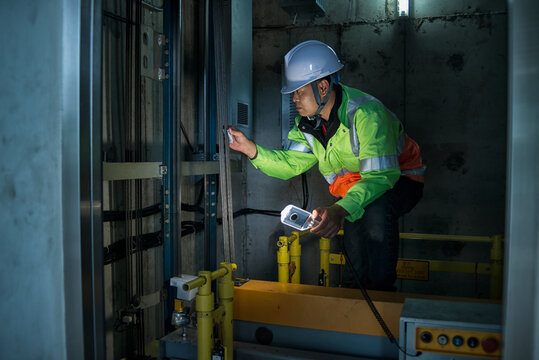

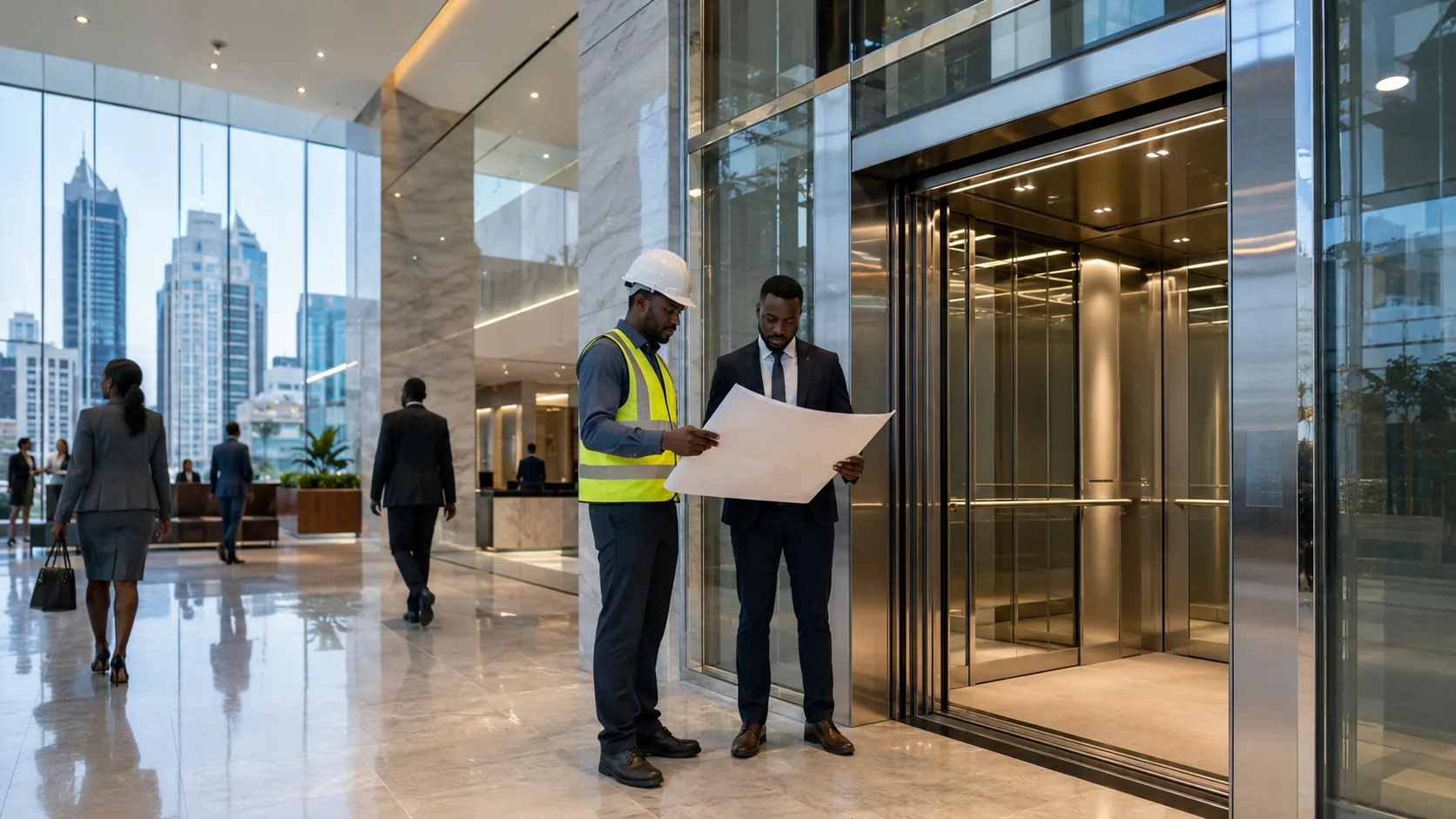

Fueled by rapid urbanization and large-scale infrastructure projects, the market for high-speed elevators in Kenya is evolving quickly. Installing Ultra-High Speed elevators has become a growing priority for high-rise commercial towers, mixed-use developments, and premium residential buildings, particularly in Nairobi and other emerging urban hubs.
With Kenya’s construction sector continuing to expand in value and complexity, the demand for advanced vertical transportation solutions underscores the scale of opportunity for intelligent, future-ready elevator systems.
Question Now is, What Does an Ultra High Speed Elevator Offer More than a Standard One?
1. IoT Integration in Ultra High Speed Elevator Systems
Modern Ultra High Speed elevator systems are built with integrated IoT (Internet of Things) sensor networks. These sensors continuously collect real-time data on performance metrics, usage patterns, and component health. This IoT infrastructure enables two critical advanced functions:
- Predictive Maintenance
How it works: Sensors monitor key mechanical and operational parameters, such as vibration, noise, temperature, and motor performance, specific to high-speed operation. By detecting anomalies from baseline data, the system can alert maintenance teams to potential issues before they lead to a breakdown.
- Value for Ultra High Speed: This is especially crucial for high-speed systems, where preventing unexpected downtime is a top priority for building operations and user convenience in high-traffic buildings across Kenya.
- Data-Driven Performance Support
How it works: IoT sensors gather data on traffic patterns, including peak demand periods and frequent destination floors. This data is fed into the building’s AI-powered dispatching system, which uses it to optimize car allocation and movement strategies.
- Value for Ultra High Speed: While the IoT sensors provide vital traffic data, it is the integrated AI dispatching system that intelligently manages ultra-high speed cars to reduce wait and travel times during heavy traffic.
- Centralized Monitoring & Response
The system includes a centralized IoT dashboard for building management and maintenance teams, providing a real-time overview of all elevator statuses. Automated alerts can be triggered for technical faults requiring specialist intervention, ensuring rapid response and consistent performance, critical for modern developments in Kenya.
2. Cost Saving – Especially with the Scalable Implementation of Ultra High Speed Elevators in Kenya
While reducing energy consumption is a significant benefit, the operational cost savings from Ultra High Speed elevators extend far beyond lower utility bills.
- Lower Energy Consumption
Regenerative drives capture energy generated from the elevator’s movement and feed it back into the building’s power grid. Combined with intelligent scheduling and standby modes, this significantly reduces electricity consumption—an important advantage for energy-conscious developments in Kenya.
- Lower Operational Costs
The true financial impact of a modern Ultra High Speed elevator system lies in minimizing maintenance and repair costs. This is achieved through predictive analytics that monitor motors and components to prevent failures, along with optimized scheduling that reduces wear and tear.
As a result, maintenance visits become less frequent and more efficient—crucial for commercial and residential buildings in Kenya that rely heavily on elevator uptime. An extended system lifespan ultimately defers major capital expenditures and delivers a stronger return on investment.
3. Traffic Analysis
To maximize efficiency, Ultra High Speed elevators are deployed as part of a building-wide solution integrated with AI-powered traffic management systems. While the advanced motor technology provides swift and smooth vertical movement, it is the building’s AI dispatching system that optimizes performance, adapts to traffic flow, and manages cabin operations to improve overall efficiency, particularly during peak usage hours.
4. Better Safety and Security
A comprehensive Ultra High Speed elevator installation includes integrated cameras, airbags, anti-lock braking systems, reinforced frames, and automatic crash notification technology. These systems are also equipped with sensors that detect obstructions, unusual vibrations, smoke, or fire in the shaft—triggering immediate safety responses.
Ultra High Speed elevators can integrate seamlessly with building access control systems to restrict usage to authorized personnel. Features such as destination dispatch ensure passengers only access permitted floors, while in-cabin surveillance and two-way emergency communication provide added safety and peace of mind for diverse users relying on elevators in Kenya.
Conclusion
Kenya’s rapid urban growth demands building solutions that are not just modern, but intelligent. Implementing Ultra High Speed elevators in Kenya offers clear strategic advantages for high-rise developments in this dynamic market.
This is an investment in long-term value, sustainability, and tenant satisfaction. Ultra High Speed elevators in Kenya are no longer a luxury; they are an essential feature for high-traffic buildings that aim to be efficient, safe, and future-ready.
As Kenya’s skyline continues to rise, embracing this technology is key to building smarter, not just taller.