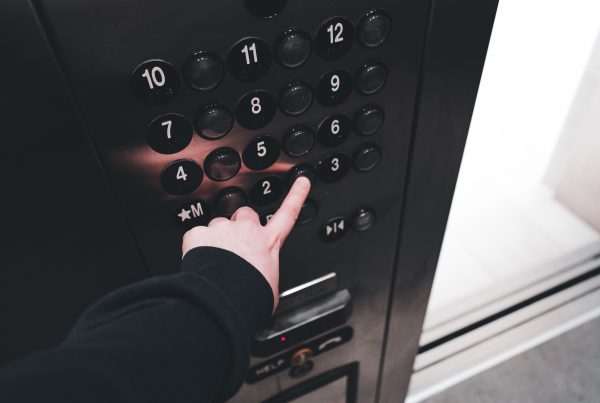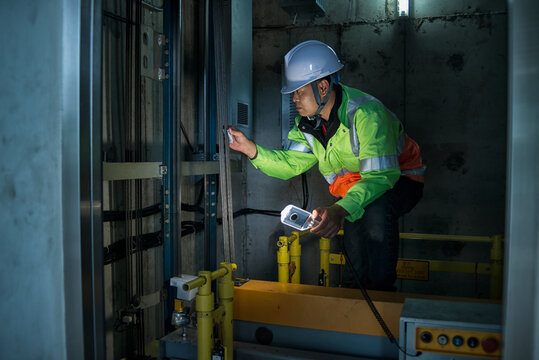

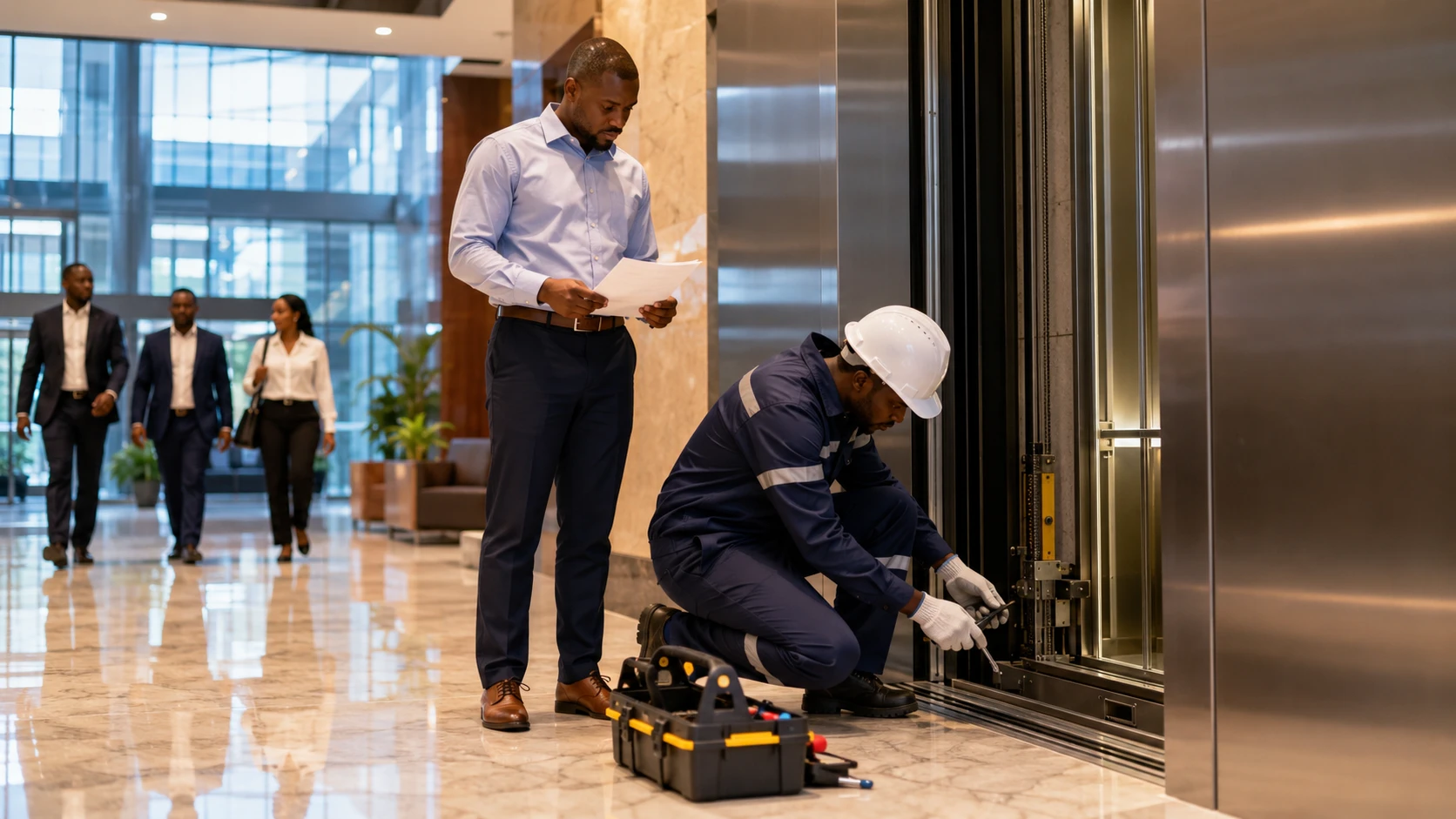

A broken lift is rarely just a maintenance problem, it’s a business problem. Lost sales, unhappy tenants, idle staff, and a building that suddenly feels unreliable. In Kenya’s commercial properties, downtime costs far more than the repair that follows it, yet most owners only react once the lift has already failed. There’s a smarter way. Preventive maintenance, servicing your lifts on a schedule instead of waiting for trouble, protects both your equipment and your bottom line.
How Much Does Preventive Maintenance Cost in Kenya in 2026?
The honest answer is that it depends on your building, and any provider who quotes a flat figure before seeing your lifts is guessing. What you’ll pay is shaped by a handful of things: the number of floors and lifts, how heavy your daily traffic is, whether you’re using original (OEM) spare parts, hydraulic versus traction machinery, and the age of the equipment. A quiet low-rise residential lift sits at one end of the scale; a high-traffic bank of lifts in a busy commercial tower sits at the other.
The smarter way to plan is to ask two or three reputable firms for a written quote after a proper site survey, then compare what each one actually covers rather than just the headline number. Keep one thing front of mind: the cheapest option upfront is rarely the cheapest over five years. A thorough preventive maintenance visit that catches a worn rope or a failing contactor early spares you the far bigger repair that lands when the same part fails on a Monday morning.
Best Preventive Maintenance Contracts for Commercial Properties in Kenya
Most lift contracts in Kenya fall into two broad camps.
- The first is a basic or “oil-and-grease” plan that covers routine lubrication, minor adjustments and call-outs for small faults, but leaves you to pay separately for any real repair.
- The second is comprehensive cover, where parts and labour for most breakdowns become the contractor’s responsibility. That makes your monthly cost predictable and gives the provider a strong reason to keep the lift healthy rather than let problems pile up.
For a building older than about seven years, comprehensive cover usually pays for itself the first time it absorbs a major repair. Whichever route you pick, read the fine print. A strong agreement spells out emergency response times, after-hours cover, guaranteed access to genuine parts, and a clear preventive maintenance checklist for every visit so you can see exactly what was done. Insist on a written service report after each call. If a provider can’t tell you what they inspect or how fast they’ll reach you when someone is trapped inside a car, keep looking.
Where to Find Certified Preventive Maintenance Technicians in Kenya
This is where corners get cut, and it’s the one area you genuinely shouldn’t compromise on. Lifts in Kenya fall under the Occupational Safety and Health Act, 2007, and the Directorate of Occupational Safety and Health Services (DOSHS) requires that hoists and lifts be examined and tested by an approved person, with owners formally notifying the directorate that a lift is in use. Thorough examinations are generally carried out every six months. A technician who doesn’t understand those obligations is a liability, not a bargain.
When you’re vetting a partner, look past the headline quote. Ask how long they’ve worked on your specific type of lift, whether their people are DOSHS-recognised, how quickly they respond to entrapments, and whether they can show maintenance records from buildings like yours. Spare-parts availability and KEBS-compliant workmanship count as much as the monthly fee. An established firm like IET Solutions, which works with commercial buildings every day, is the kind of accountable partner worth putting on your shortlist.
Affordable Preventive Maintenance Packages for Kenyan Businesses
Affordable doesn’t mean cheap, it means matching the plan to how hard the lift actually works. A two-lift residential block in Kilimani has very different needs from a hospital or a shopping mall on Mombasa Road where the cars run flat out all day. Good providers tier their packages around visit frequency, so a smaller landlord might budget for quarterly servicing while a high-traffic property books monthly attention.
Here’s a simple preventive maintenance schedule example you can adapt to your building:
- Monthly: check and lubricate moving parts, test the door sensors and the alarm/intercom, and inspect car levelling and ride quality.
- Quarterly: inspect the controller and wiring, test the brakes and safety gear, and check the backup-power changeover for KPLC outages.
- Annually: run a full safety load test, inspect ropes and sheaves in detail, and complete the statutory examination ahead of your DOSHS certificate.
Spreading the work across that calendar keeps each visit short, heads off surprise shutdowns, and lets you plan the spend instead of being ambushed by it.
Types of Preventive Maintenance Services Available in Kenya
Beyond the basic service visit, several offerings are worth understanding:
- Routine inspections form the backbone, the scheduled checks that catch small issues early, before a worn rope or a tired brake becomes an emergency.
- Predictive maintenance support goes a step further, using equipment data and self-diagnostics from modern controllers to flag faults before they cause failures.
- Component replacement planning maps out when ageing parts, ropes, door operators, and control boards should be renewed, so replacements are budgeted rather than urgent.
- Emergency support arrangements define response times and after-hours cover for when something does go wrong.
- Modernization recommendations help you decide when an old lift is better upgraded than endlessly patched, often delivering better reliability, lower running costs, and improved safety.
Conclusion
A stalled lift is never just a stalled lift. It’s late tenants, lost sales, irritated customers, and a reputation that keeps taking the hit long after the doors reopen. Once you add the premium charged for emergency repairs and the cost of major parts that fail early from neglect, downtime nearly always costs more than businesses expect.
Seen in that light, preventive maintenance isn’t an expense to trim, it’s an investment that protects your revenue, your tenants and your peace of mind. The buildings that run smoothly are simply the ones that service their lifts before trouble starts. If you’d like a clear-eyed look at your lifts and a plan that fits how your building actually runs, talk to the team at IET Solutions, a short conversation now is a great deal cheaper than an “Out of Order” sign later.
FAQs:
What is preventive maintenance?
Preventive maintenance is the practice of servicing and inspecting equipment on a planned, regular schedule to keep it running reliably and to catch faults before they cause failures. For lifts, it means routine checks, lubrication, testing of safety devices, and documentation, all done proactively rather than waiting for something to break.
What are the 7 elements of preventive maintenance?
A common way to break it down is: regular inspection, cleaning, lubrication, adjustment or calibration, testing of safety and control systems, timely replacement of worn parts, and clear documentation of every visit. Together these elements keep equipment safe, efficient, and predictable.
What are the four types of preventive maintenance?
Maintenance strategies are often grouped into four types: time-based (servicing on a fixed calendar schedule), usage-based (servicing after a certain amount of use), predictive (acting on data and condition monitoring), and condition-based (acting when an inspection reveals a developing fault). Most good lift programs blend these.
What are the 10 rules of preventive maintenance?
This refers to the widely cited idea that addressing a problem proactively is roughly ten times cheaper than dealing with it after failure. The exact ratio varies, but the principle holds: planned care almost always costs a fraction of reactive repairs and unplanned downtime.